Key Takeaways
1. Connecting a referral program directly to scheduling software solves the biggest problem: most satisfied customers simply forget to refer. By triggering a referral invitation automatically when an appointment is marked complete and paid, businesses capture the moment right after a great experience, rather than relying on customers to remember on their own weeks later.
2. Timing and reward structure both need to match the type of business. Ongoing services like salons and gyms do best with service credits sent 24-72 hours after an appointment (or even 3-5 days for salons, to catch the "compliment window"), while one-time or infrequent services like HVAC repairs or legal work do better with cash or gift cards, since the customer may not need the service again for years.
3. Two-sided rewards work best for consumer services, while regulated industries need a different approach entirely. "Give $20, get $20" style rewards work well for salons, med spas, and fitness studios where both people are likely customers, but healthcare and legal practices need to keep messaging professional and values-based (since referral fees may even be restricted by industry regulations) and must be careful not to include any protected client information in the referral tracking itself.
If you run an appointment-based business—whether it's a dental practice, med spa, HVAC company, or consulting firm—you already know that referrals are gold. Someone who comes to you because their friend raved about your service is leagues more valuable than someone who clicked on a Facebook ad.
The stats back this up: 92% of people trust recommendations from friends and family over any other form of advertising. And the financial impact is even more compelling—according to a Wharton School of Business study published in the Journal of Marketing, referred customers have 16% higher lifetime value and significantly higher retention rates that persist over time compared to customers acquired through other channels.
But here's the problem: most satisfied customers don't actually refer anyone. Not because they don't want to—they just forget, or they don't think about it, or the moment passes. They book their next appointment, leave happy, and move on with their day.
What if your scheduling software could automatically turn every completed appointment into a referral opportunity? No awkward asks. No manual tracking. Just a smooth, automated system that rewards your best clients for spreading the word.
In this guide, you'll learn how to connect referral programs with tools like Calendly, Vagaro, Jane, and 30+ other platforms. We'll cover real-world examples from dental practices, med spas, consultants, and home service businesses. You'll see what actually works (and what doesn't) when it comes to reward structures, and how to set everything up without needing a developer or spending weeks creating something that might work.
Let's start with why this matters so much for appointment-based businesses specifically.
Why Your Scheduling Software Needs a Referral System
Think about how most appointment-based businesses try to get referrals. Maybe you ask clients to "tell their friends" at the end of a visit. Maybe you have business cards at the front desk. Maybe you post on social media hoping someone shares it.
The problem? These methods rely entirely on your clients remembering to refer you at exactly the right moment—when their friend mentions needing a dentist, or when their coworker complains about their HVAC breaking down, or when someone asks for a massage therapist recommendation.
That moment might happen. But it also might not. And even if it does, there's no tracking, no follow-up, and no reward for the person who sent business your way.
This is where automation changes everything. When your scheduling software connects to a referral program, you can:
- Trigger referral invites at the perfect moment (right after a great appointment)
- Track exactly who referred whom (no more guesswork)
- Automatically reward both parties (the referrer gets credit, the new client gets a discount)
- Follow up without lifting a finger (reminder emails, reward notifications - all handled)
The Wharton study tracking nearly 10,000 customers over three years found that referred customers not only have higher lifetime value, but their retention advantage persists over time—meaning the benefits compound year after year.
For appointment-based businesses specifically, this is huge. You're not selling one-time products. You're building relationships that span years, sometimes decades. A dental patient who comes in twice a year for the next 20 years? That's 40 appointments. An HVAC customer who calls you for maintenance and repairs over a decade? That's thousands in revenue. When those customers come from referrals, they're statistically more likely to stick around—and they're more likely to refer others themselves, creating a compound effect.
Why Appointment-Based Businesses Are Perfect for Referrals
Think about it. When someone books an appointment with you—whether it's for a haircut, a dental cleaning, a consultation, or an HVAC repair—they're already showing trust. They chose you over your competitors. And if that appointment goes well, they're in the perfect mindset to tell someone else about you.
The problem is, most businesses miss this opportunity entirely. The appointment ends, the client leaves, and that's it. Maybe you send a "thanks for coming in" email, but there's no systematic way to turn that satisfaction into your next booking.
Compare that to what happens when you integrate a referral program with your scheduling software:
- Client books and completes their appointment
- Your system automatically sends them a referral invitation (no manual work)
- They share their unique link with friends
- When someone books using that link (or uses name matching), both people get rewarded
- You track everything in one dashboard
No spreadsheets. No hoping people remember. No missed referrals.
The Scheduling Connection
Here's why this works so well with appointment scheduling software: your system already knows exactly when someone had a great experience. Appointment completed? Check. Payment received? Check. Positive review left? Even better.
These are perfect trigger points to automatically invite someone into your referral program. You're not interrupting them or hoping they remember weeks later. You're asking at exactly the right moment—when they're still thinking about how helpful you were.
How the Integration Actually Works
You don't need to be a tech genius to set this up. Here's the basic flow:
Your client books an appointment through Calendly, Acuity Scheduling, Vagaro, or whatever you're currently using. They show up, you deliver great service, the appointment wraps up.
Now here's where the magic happens. Your scheduling software talks to ReferralHero (or similar referral platform) and says, "Hey, this appointment just got completed." That triggers an automated email to your client with their unique referral link and details about what they can earn.
Your client shares that link with friends via email, text, or social media. When someone books an appointment using that link (or if you have name matching implemented), the system tracks it automatically. Both your original client and the new client get their rewards.
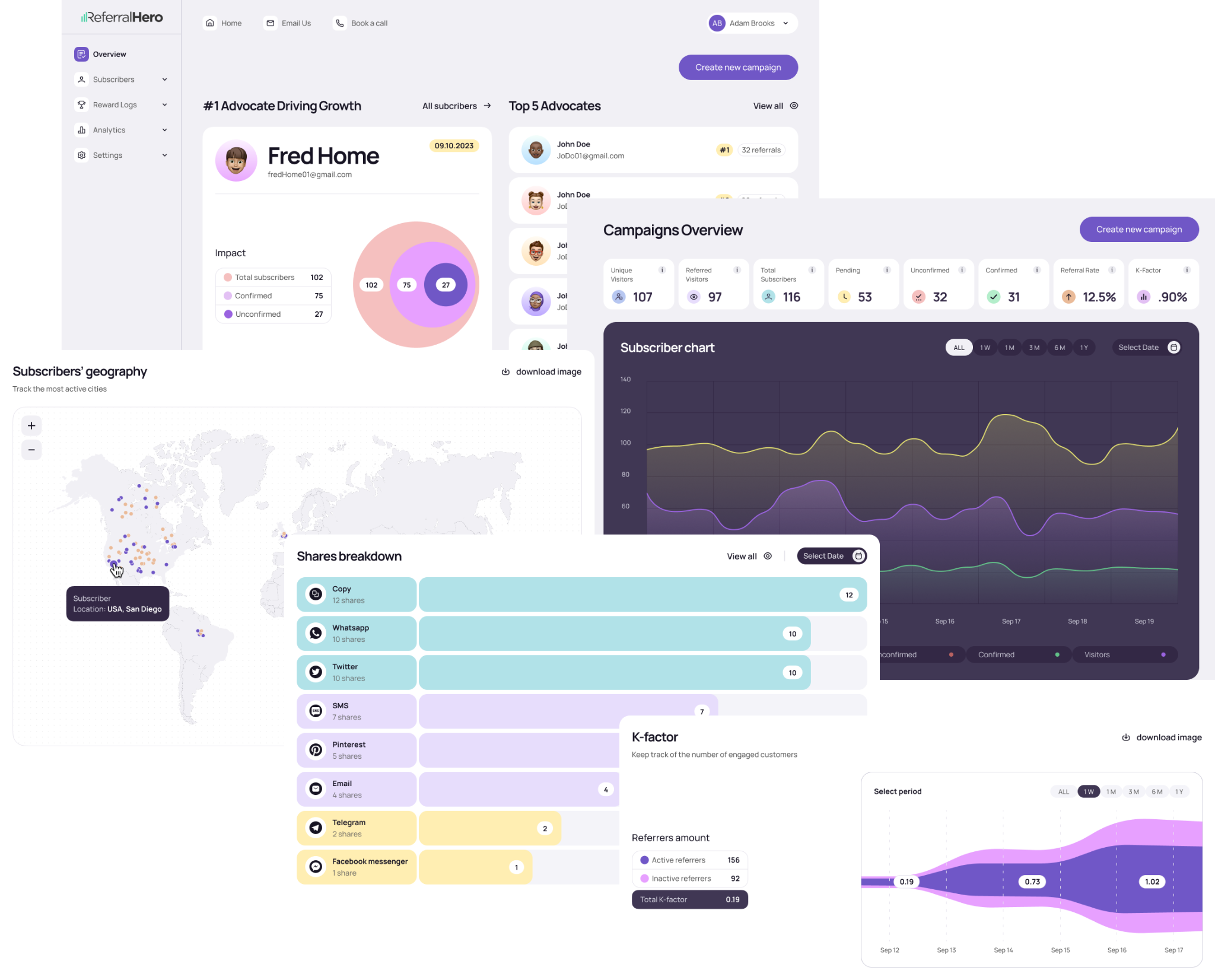
You can see everything in one dashboard: who's referring, who's converting, and what your ROI looks like!
Integration Methods
Depending on what you're using, there are a few ways to connect things:
Native integrations – Some platforms like Calendly have direct connections. The process is pretty straightforward, but there is some information that needs to be entered and adjusted.
Zapier, N8N or Make – These are middleware tools that connect almost anything to anything. For example, when an appointment is completed in ServiceTitan, the person is automatically added to the ReferralHero campaign.
Webhooks – For more custom setups, your scheduling tool can ping ReferralHero when certain events happen.
API connections – If you've got a developer or more complex needs, you can build deeper integrations. But most businesses never need this level of work.
What Gets Tracked?
Everything important: who referred whom, where they shared the link (email, Facebook, SMS), conversion rates by referrer, reward status (pending, issued, redeemed), and your overall ROI. No more guessing about whether your referral program is actually working!
Scheduling & Practice Management Software: How to Integrate by Industry
Whether you're using general scheduling tools or industry-specific practice management systems, here's how to connect them with your referral program.
Cross-Industry Scheduling
Platform: Calendly
Who uses this: Coaches, consultants, therapists, professional services—anyone doing appointments that don't require specialized industry software.
Calendly is straightforward and intuitive. Someone clicks your link, picks a time, done.
How the integration works: Calendly has webhooks built in, which means when someone completes an appointment with you, it can automatically notify ReferralHero. From there, ReferralHero sends the referral invitation email.
The setup is straightforward. Grab a webhook URL from ReferralHero, paste it into your Calendly event settings, map a few fields (name, email), and you're live.
What works well: Send the referral ask about 24 hours after the appointment, not immediately. Give people time to reflect on the value they got. For consultants especially, this timing matters—people need to see results or at least feel like the session was worth it before they'll refer.
Offer service credits rather than cash. A business coach might offer "$200 off your next package" rather than "$200 cash." Why? Because it keeps people coming back AND gives them skin in the game for referrals. They're more likely to book again if they've got credit sitting there.
Platform: Acuity Scheduling (Squarespace Scheduling)
Who uses this: Therapists, tutors, coaches, personal trainers, nutritionists, consultants, creative professionals—anyone offering one-on-one services.
Acuity Scheduling (now part of Squarespace) is a solid alternative to Calendly with more customization options. It's particularly popular with wellness professionals and coaches who need intake forms and package booking.
How the integration works: Connect via Zapier or webhooks. When an appointment is marked complete, it triggers the referral invitation through ReferralHero.
What works well: Package-based rewards. Many Acuity users sell packages (like "10 sessions"). Offer referral rewards after package completion, not individual sessions. "Complete your 10-session package and refer a friend—both get 15% off your next package."
Acuity's intake forms collect valuable info. Use this to segment your referral asks. A nutrition coach might wait until clients hit their first milestone (lost 10 lbs, completed 30 days) before asking for referrals.
Platform: Square Appointments
Who uses this: Small service businesses across industries—barbers, personal trainers, consultants, mobile services, anyone already using Square for payments.
If you're already using Square for point-of-sale, adding their scheduling tool is straightforward. It's free for one staff member, making it popular with solo operators and small teams.
Integration approach: Zapier connection or API. Trigger when appointment status changes to "completed" and payment is processed.
Why Square users love referrals: You already have payment data. You know exactly who your highest-value clients are. Target referral invitations to clients who've spent $500+ or who book regularly. These are your best referral candidates.
Square's customer directory makes it easy to segment. Run referral campaigns for "clients who've booked 5+ times" separately from one-time visitors.
Reward idea: Since you're processing payments through Square anyway, service credits apply automatically at checkout. No manual tracking needed.
Platform: GoHighLevel
Who uses this: Marketing agencies, coaches, course creators, consultants, franchises, and service businesses that want CRM + marketing automation + scheduling in one platform.
GoHighLevel is the all-in-one tool for businesses that need more than just scheduling. If you're running nurture campaigns, sales funnels, and appointment booking, this is your platform.
Integration approach:
Connect GoHighLevel to ReferralHero through Zapier or webhooks. GoHighLevel's robust webhook capabilities make it straightforward to send appointment data to ReferralHero when specific events occur.
Workflow examples:
Once connected, you can create referral sequences triggered by customer behavior:
- Client books 3+ appointments → send referral invitation
- Client leaves 5-star review → send referral invitation with bonus reward
- Client completes program/package → upgrade to VIP referral status
For agencies:
If you're an agency using GoHighLevel for multiple clients, you can set up separate referral campaigns for each client in ReferralHero and manage them all from one dashboard.
Just like you wouldn't use your CRM to run your Facebook ads or manage your email deliverability, referral programs work best with dedicated software. GoHighLevel handles your client relationships and automation—ReferralHero handles the referral tracking, fraud detection, and reward management. They work together, each doing what they do best.
Salons & Spas
Platforms: Vagaro, Boulevard
Vagaro is the go-to for hair salons, barbershops, nail salons, spas, massage therapists, and fitness studios. It handles everything—booking, point of sale, client management, marketing.
Boulevard is the premium option for high-end salons and luxury wellness businesses. Beautiful interface, premium features, built for upscale service businesses.
Integration approach: Connect via Zapier or the API. Set it up so that when an appointment is marked "completed" and payment is received, it triggers the referral invitation.
Timing is everything here: Don't send the referral ask the second someone walks out the door. For salons especially, wait 3-5 days. Why? Because that's when they start getting compliments. "Oh my god, your hair looks amazing! Who did it?"
That's when you want your referral program top of mind. When their friend says "I need to find a new stylist," your client can immediately text them the link.
The two-sided reward works best: Beauty and wellness clients respond really well to "Give $20, Get $20" style programs. Both the referrer and their friend get a discount. It makes sharing feel less self-serving and more like you're doing your friend a favor.
For premium/luxury businesses (Boulevard users): If you're using Boulevard, you're probably not a discount brand. Your referral rewards should reflect that. Don't offer $10 off—that cheapens your positioning. Instead:
- "Refer three friends, earn a complimentary facial (up to $150 value)"
- "Your friend gets $100 off their first visit, you get $100 credit"
- "Top referrer each quarter wins a luxury spa package"
Make it feel exclusive. Make it feel premium. That's your brand, and your referral program should match.
Quick wins:
- Include the referral program info in your appointment confirmation texts. People read those religiously. Add a line: "P.S. Refer a friend and both save $20 → [link]"
- QR codes at the checkout desk: "Scan here to join our VIP rewards program and get $20 when you refer a friend."
Platform: Fresha
Who uses this: Salons, barbershops, spas, beauty professionals, nail technicians, makeup artists—especially independent professionals and budget-conscious businesses.
Fresha is unique because it's completely free for businesses (they monetize through payment processing). This makes it incredibly popular, especially internationally and with solo practitioners just starting out.
Integration approach: Zapier or API connection. Fresha has a robust API that connects well with referral platforms.
Timing considerations: Same as other salon software—wait 3-5 days after the appointment so clients get compliments before you ask them to refer.
Reward structure: Since Fresha users are often price-conscious (they chose a free platform), two-sided rewards work really well. "Give £15, Get £15" or "Give $20, Get $20" resonates with both the business and the client base.
Many Fresha businesses are mobile or independent—they don't have a physical checkout counter. Use SMS or email-based referral sharing instead of QR codes.
Multi-Location Operations
Platform: Zenoti
Who uses this: Multi-location salons, spas, fitness centers, franchises, anyone operating at scale.
Zenoti is enterprise-level. If you've got multiple locations or you're managing a franchise, this is probably what you're running on.
Integration: API connection with multi-location support.
The advantage here: You can track referrals across locations, see which spots are performing well, and which ones need help. You can also do location-specific rewards or run competitions between locations.
Example: "Top 3 locations by referral count this quarter split a $5,000 bonus pool."
Suddenly your front desk staff at every location cares about promoting the program. They're not just booking appointments, they're actively encouraging referrals because it affects their bonus.
You can also do regional campaigns. "All Florida locations: double referral rewards in March." Test different strategies, see what works, roll it out everywhere.
Fitness & Wellness Studios
Platforms: Mindbody, WellnessLiving, Zen Planner
Mindbody is the dominant platform for yoga studios, Pilates, barre, cycling studios, martial arts, dance studios, and wellness centers. If it involves classes, memberships, and retail, you're probably using Mindbody.
WellnessLiving and Zen Planner are strong alternatives popular with gyms, CrossFit boxes, martial arts schools, and fitness studios looking for more affordable options.
Why fitness studios are referral goldmines:
Group fitness is inherently social. People work out with friends. They talk about their studio at brunch. They post about their workout on Instagram. When someone asks "Where do you do yoga?" they're ready with an answer—you just need to give them a way to get credit for it.
Setup:
Most fitness platforms connect via Zapier or API. Trigger referral invitations when:
- A new member completes their first month
- Someone upgrades from intro offer to full membership
- A client hits a milestone (25 classes, 50 classes, 100 classes)
- Someone purchases a long-term package (3-month, 6-month, annual)
Reward structures that work:
"Bring a friend" free classes: "Bring a friend to class—their first class is free, you earn a free class too."
This is brilliant because:
- Your friend gets to try the studio with someone they know (less intimidating)
- You get a reward
- The studio gets a qualified lead who's already shown up and experienced the vibe
Milestone rewards: "Hit 50 classes? Refer a friend and both get a free month."
People who hit 50 classes are hooked. They're your evangelists. Give them a reason to talk about you.
Retail + membership bonuses: Many studios sell retail (yoga mats, protein powder, apparel). "Refer a friend who joins—get $50 credit toward retail or your membership."
What works particularly well:
Challenge-based referrals: Run a 30-day challenge. Anyone who completes it AND refers a friend gets a premium reward (free month, exclusive merch, private session).
The friend group effect: Fitness is tribal. When one person from a friend group joins, others follow. Reward the first person who got their friends to join: "Refer 3 friends, become a VIP member with exclusive perks."
Timing:
Don't ask brand new members. They haven't built the habit yet. Wait until:
- They've attended 8-10 classes (habit is forming)
- They upgrade from intro to full membership (they're committed)
- They post about your studio on social (they're already talking about you)
For membership-based models:
Offer ongoing rewards, not just one-time bonuses. "Every friend who joins and stays for 3 months = one free month for you." This creates a continuous referral engine.
Dental Practices
Platforms: Dentrix, Eaglesoft, Open Dental, Curve Dental
Dental practices are referral machines when they set up the right system. Why? Because the average new patient is worth $300-800 in their first year, and dental is relationship-based. Families stick with dentists for years.
Think about it—when you move to a new city, what's one of the first things you ask your neighbors? "Do you have a dentist you like?" That conversation is happening constantly. You just need a way to capture it.
Setup: Most dental software connects via Zapier or webhooks. Trigger the referral invitation when a new patient completes their first appointment and becomes an "active" patient (meaning they're on the books for a follow-up).
Reward structure that works: $50-100 credit per new patient referral is standard. But here's where dental gets interesting: family bonuses.
"Refer an entire family (3+ people), get a free teeth whitening ($400 value)."
Families talk to other families. Parents at soccer practice, neighbors at block parties. One family referral can turn into 3-4 patients on your schedule, each with decades of lifetime value.
Also, when you ask matters. After a routine cleaning? Great time. Everyone feels good, their teeth are clean, they're happy. After a painful root canal? Maybe not the best moment.
Med Spas & Aesthetic Practices
Platforms: Mangomint, AestheticsPro, Aesthetic Record, Zenoti
Med spa referrals are gold because treatments are high-ticket ($300-3,000+) and results are visible. When someone gets Botox or a laser treatment and looks amazing, their friends notice and ask.
"What did you do? You look incredible."
That's your opening. That's when you want your referral program in their mind.
Integration triggers:
- After completing a treatment package
- 1-2 weeks post-Botox/filler (when results are fully visible)
- After facial or body contouring session
- After they've posted their results on Instagram (yes, people do this)
Rewards that work:
- $100-250 credit or free add-on treatment
- "Refer 3 friends, earn a free laser session"
- Two-sided: "Bring a friend to your next appointment, both save $100"
The two-sided reward works particularly well in this industry because people often come in groups anyway. "Me and my girlfriends are all getting Botox before the wedding" is a real thing.
The social proof angle: Encourage clients to share before/after photos (with permission, obviously) when they share their referral link. Visual results sell these services better than any ad ever could.
"Check out my results from [Med Spa Name]! If you want to try them, use my link and we both save $100."
That post with a genuine before/after? That converts.
Chiropractic Practices
Platforms: ChiroTouch, Genesis Chiropractic
Chiropractic is perfect for referrals because pain relief is highly sharable. "I couldn't turn my neck last week and now I feel amazing—you HAVE to see Dr. Smith."
People who are in pain talk to other people who are in pain. Chronic back pain? You're probably mentioning it to coworkers when you're standing at your desk. Someone else says "Oh man, I have the same thing." Boom—referral opportunity.
When to ask: After someone enrolls in a wellness plan or after they've had noticeable pain improvement. Not after visit one. They need to experience actual results before they'll refer.
Wait until they say something like "I slept through the night for the first time in months" or "I was able to play with my kids without my back hurting." That's when they're ready to tell people about you.
Messaging strategy: Frame it as helping others, not just earning rewards.
"Know someone suffering from back pain? Help them find relief and earn a free adjustment."
This feels less salesy and more altruistic, which resonates with chiropractic patients. They're not just getting a discount—they're helping a friend or family member get out of pain.
Home Service Businesses
Platforms: ServiceTitan, Housecall Pro, Jobber, FieldEdge, Service Fusion, ServiceTrade, AccuLynx, Buildertrend
Home services (HVAC, plumbing, electrical, roofing, landscaping, cleaning, pest control) are naturally referral-driven. Why? Because neighbors talk to neighbors, and when you need a plumber at 11pm on a Sunday, you text your friend: "Who do you use?"
This is probably the industry with the highest organic referral rate. People are already referring you—you just need to systematize it and reward it.
Integration triggers: Job completion + payment received. Simple as that.
Don't trigger before the job is done. Don't trigger before they've paid. You want to make sure they're actually satisfied and the money is in your account.
Rewards: $50-150 service credits, free seasonal maintenance, priority scheduling. For big-ticket items (like HVAC replacement), go higher: $200-300 referral bonuses make sense when your average job is $5,000.
For recurring services like lawn care or cleaning, service credits work great. For one-off emergency services, cash or gift cards work better (people might not need you again for years).
Creative tactics:
Yard signs with QR codes: "Scan to save $50 on your next service"
When you finish a roofing job, you put up a sign in the yard. Instead of just "Another Quality Job by [Company]," add a QR code. Neighbors walk by, scan it, boom—they're in your referral program.
Truck/van wraps: Put your referral program on your vehicles. Your trucks are driving billboards. Use them.
Door hangers: After you finish a job, leave door hangers on the neighbors' doors. "Your neighbor just used us for [service]. We're in the area all week. Scan for $50 off."
"Refer your neighbor" campaigns before peak season: February/March for HVAC (before summer), September for heating, spring for lawn care. Time it right.
Healthcare & Physical Therapy
Platforms: Jane, AdvancedMD, Athenahealth, Kareo, WebPT, Revolution EHR
Jane is huge in the wellness and healthcare space—used by physical therapists, chiropractors, massage therapists, mental health counselors, acupuncturists, and naturopaths. Clean interface, HIPAA-friendly, built specifically for practitioners.
HIPAA compliance reminder: Healthcare providers using referral programs should consult with their compliance team to ensure proper Business Associate Agreements (BAAs) are in place with their referral platform provider. Different referral platforms have different HIPAA compliance capabilities and requirements.
When setting up referral tracking, follow the principle of minimum necessary information. The referral program operates completely separately from patient medical records.
You're not saying "John referred you because he had knee surgery." You're just saying "John thought you might benefit from our services."
Best timing: For ongoing treatment, don't ask after the first visit. Wait until someone's completed a package or hit a milestone.
Physical therapy especially—people need to see actual progress. After 8-12 weeks when they've met their goals and feel better? Perfect time. A physical therapy patient who just finished their treatment plan successfully? That's when to ask for referrals. Someone who came in once for an assessment? Too soon. They haven't experienced enough value yet.
Tone matters: Healthcare referrals should feel professional, not salesy. Instead of "Earn cash for referrals!" try "Help a friend find relief" or "Share the care that worked for you."
The messaging should align with your practice's values. You're not selling widgets. You're helping people get healthy.
Reward ideas that fit:
- $25-50 credit toward future visits
- Free wellness consultation
- Discount on supplements or therapeutic products you sell
- Complimentary follow-up session or assessment
Keep it related to health and wellness. A $50 Amazon gift card feels weird. A free massage or wellness product? That makes sense.
What this looks like in practice: Physical therapy clinics often find that patients who complete their treatment plans become their best referral sources. These referred patients tend to be higher quality—they show up for appointments, follow treatment plans, and stick with the program. Why? Because someone they trusted vouched for the clinic's results.
Patient Engagement Platforms
Tools: Weave, Solutionreach, NexHealth, RevenueWell
These platforms handle patient communication, appointment reminders, and reviews—which makes them perfect channels for referral requests. If you're already using one of these for reminders and reviews, adding referrals is a natural extension.
Strategy: Don't ask for referrals in appointment reminder messages. That's annoying. People are trying to remember what time to show up, not think about marketing.
Instead, send a separate message 24-48 hours after the appointment with a satisfaction check-in:
"Glad we could help! If you know anyone else who could benefit from our care, we'd love to meet them. [Referral link]"
Even better: combine review requests with referral invitations.
"Thanks for the 5-star review! Want to earn rewards for referring friends? [Link]"
People who are happy enough to leave a review are your best referral candidates. They're already in the mindset of talking about you positively.
Legal Practices
Platform: Clio
Clio is the leading practice management software for law firms. It handles everything—case management, billing, client communication, document management, and calendaring.
Why legal is different:
Legal referrals are high-value but require trust. You're not referring someone to get a haircut—you're referring them for a divorce, a lawsuit, a business contract. The stakes are higher.
Most legal referrals happen through professional networks (lawyer to lawyer) or personal relationships (friend to friend). Your referral program needs to reflect this seriousness.
HIPAA note for legal:
Attorney-client privilege is sacred. Your referral program should never include case details, legal issues, or any client information beyond name and contact details.
You're not saying "Sarah referred you for her custody case." You're saying "Sarah thought our firm might be able to help you."
When to ask:
After successful case resolution. Someone just won their case or settled favorably? They're grateful and willing to help others.
NOT during ongoing litigation. People are stressed. Wait until resolution.
Integration approach:
Clio Connect or Zapier. Trigger referral invitations when case status changes to "closed" with favorable outcome.
Reward structures:
Legal is tricky because lawyer referral fees are regulated and often prohibited. Check your jurisdiction's ethics rules.
Instead of cash:
- Discount on future legal services for the referrer
- Complimentary document review
- Free 30-minute consultation for estate planning update
- Charitable donation in the client's name
Messaging matters:
Frame referrals as helping others access justice, not earning rewards.
"Know someone who needs legal help? We'd be honored to serve them."
This aligns with the professional, service-oriented nature of legal practice.
What works:
Practice area specific: If you do multiple practice areas (family law, estate planning, business law), track which clients refer which types of cases. Family law clients refer family law. Business clients refer business matters.
Professional referrals: Set up a separate referral program for other professionals (accountants, financial advisors, therapists) who refer clients. These are ongoing relationships, not one-off referrals.
Timing:
- Post-case resolution survey: "We're glad we could help. If you know others who need legal assistance..."
- Annual check-ins: "It's been a year since we helped with your estate plan. Life changes—we're here if you need updates. And if friends need similar help..."
Keep it dignified:
Legal marketing requires a professional tone. Your referral program shouldn't feel like a car dealership promotion. Keep rewards modest, messaging professional, and always client-focused.
Setting Up Your Program
This is a very macro step-by-step view on setting up a referral program.
Step 1: Decide on your reward
Keep it simple. One-sided or two-sided? What's the value?
A good rule of thumb: 10-20% of your average transaction makes sense.
Examples:
- Hair salon: "Give $20, Get $20"
- Consultant: "$200 off your next coaching package"
- HVAC company: "$150 credit for equipment installation referrals"
- Dentist: "$75 credit per new patient"
Don't overthink this. Pick something meaningful but sustainable. You can always adjust later based on what you learn.
Step 2: Set up your referral campaign
You can create an account on ReferralHero, and play around with the dashboard and campaign details before enrolling. Although, we recommend setting up a demo first, so we can really outline what your needs and goals are.
Most platforms have templates pre-built, so you're not starting from scratch. You're just filling in your business details and adjusting the copy to match your voice.
Step 3: Connect your scheduling software
In simplest terms, depending on what you use:
- Native integration = follow the platform's connection instructions
- Zapier connection = "When appointment completed in [tool], add to ReferralHero"
- Webhook = grab URL from ReferralHero, paste into your scheduling settings
- API = might need a developer for custom integration
Step 4: Test it
Book a test appointment with yourself or a colleague. Complete it. Make sure the referral invitation email sends. Click through the referral link. Make sure tracking works.
This saves you from launching a broken system.
Step 5: Launch and promote
Email your existing clients about the new program. Add it to your website. Mention it on social media. Train your staff to bring it up. Put signage in your office or on your trucks.
Don't just turn it on and hope people notice. Tell people it exists and continue that process!
What Actually Works: Best Practices
Timing Matters More Than You Think
The when of asking for referrals is almost as important as the how.
Best times:
- 24-48 hours after appointment (satisfaction is high, experience is fresh)
- After a milestone (completed treatment plan, hit fitness goal, finished project)
- When results are visible (post-treatment for med spas, after compliments start for salons)
Worst times:
- Before the appointment happens (obviously)
- Immediately after painful/difficult procedures
- Before someone's seen results
If someone just had oral surgery, wait a week. If someone just got Botox, wait until it's fully settled in. Timing matters.
Reward Structures: What Works by Business Type
For ongoing services (salons, gyms, therapy, subscriptions): Service credits work best. They keep people coming back and make rewards more valuable because clients are already planning to return.
If you run a hair salon and someone has a standing appointment every 6 weeks, they're going to use that $20 credit. It's valuable to them.
For one-time or sporadic services (consultants, home services): Cash, gift cards, or significant one-time discounts. If someone isn't sure they'll need you again soon, service credits feel less valuable.
If you fixed their HVAC and it's running fine, they might not need you for 5 years. A $100 Visa gift card or Amazon card feels more valuable than "$100 credit toward your next service."
For high-ticket services ($500+): Go bigger. A $50 reward feels insulting when you charge $3,000 for a service. Think $100-300 range, or percentage discounts (20% off next service).
Your margins can handle it, and the referrals are worth way more than the reward cost.
Two-sided vs one-sided: Two-sided ("Give $25, Get $25") works better for consumer services where people have friends in similar situations. Hair salons, med spas, fitness studios—these benefit from two-sided because both people are likely customers.
One-sided works better for B2B or niche services where referrals are less common. If you're a specialized consultant, the person being referred might be very specific. Two-sided doesn't add as much value there.
Make It Easy to Share
Your clients aren't going to log into a portal, copy a code, remember to mention it when their friend books, and then follow up to make sure they got credit.
Make sharing frictionless:
- One-click social sharing (Facebook, Instagram, Twitter, LinkedIn)
- SMS sharing (text the link directly to friends from their phone)
- Email templates they can customize
- QR codes for in-person referrals
- Name matching (referrals says the advocates name when booking, signing up registering, etc.)
The easier you make it, the more it happens. Every extra step you add cuts your referral rate in half.
Don't Trigger Rewards Until Money's in the Door
Here's a trap people fall into: rewarding referrals as soon as someone books an appointment, not when they complete it. Bad idea. People cancel. People no-show. You'll end up giving away rewards for appointments that never happened.
Set your trigger for "appointment completed + payment received" or at minimum "appointment completed." This also naturally filters out low-quality referrals. If someone refers 10 people and none of them actually show up, they don't get rewards. That's how it should be.
Frequently Asked Questions
Do I need technical skills to set this up? No. Most integrations are straightforward if you use tools like Zapier or native connections. If you can set up your scheduling software in the first place, you can set up a referral program.
What if my scheduling software isn't listed here? Chances are it still integrates. ReferralHero connects with 500+ tools through Zapier, Make, N8N, webhooks, and API. If your software can send data when events happen (like "appointment completed"), it can connect.
How much should I offer as a reward? A good rule of thumb: 10-20% of your average transaction value. So if your average appointment is $200, offer $20-40. For high-ticket services ($1,000+), you can go higher—$100-300 rewards make sense. The reward should feel meaningful but not eat all your profit.
Should I do one-sided or two-sided rewards? Two-sided ("Give $20, Get $20") works better for consumer services where both parties are potential customers. One-sided can work for B2B or when your referral target is very specific. Or test both if you're not sure.
When should I ask for referrals? 24-48 hours after a completed appointment is ideal. Not immediately (people need time to reflect on value), and not weeks later (they've forgotten the details). For treatment-based services, wait until results are visible.
How do I prevent fraud? Only trigger rewards after appointments are completed and paid for, not just booked. Use referral software with built-in fraud detection (IP tracking, email verification, pattern detection). ReferralHero flags suspicious activity automatically.
Will this work if I'm just one person (not a big practice)? Absolutely. Solo practitioners often see strong results because every client relationship is personal. The key is automation—you don't have time to manually track referrals, so automated systems are even more valuable for solo operations.
How long until I see results? Most businesses see their first referrals within the first few weeks of launching. Meaningful momentum usually builds over 30-90 days as more people join the program and start sharing.
Your Next Steps
Every completed appointment or job is a potential growth opportunity. Whether you're a solo consultant using Calendly, a salon running on Vagaro, a dental practice with Dentrix, or a home service company using ServiceTitan—the opportunity is the same.
The businesses that grow through referrals aren't doing anything magical. They're just systematizing what used to be random.
Here's what happens when you get this right:
- Your customer acquisition cost drops compared to paid advertising
- Your new clients are higher quality (they already trust you before they book)
- Your retention improves (referred clients tend to stick around longer)
- Your team spends less time on marketing and more time doing the work they love
The setup is straightforward. The ROI is measurable. The results speak for themselves.
Ready to get started?

